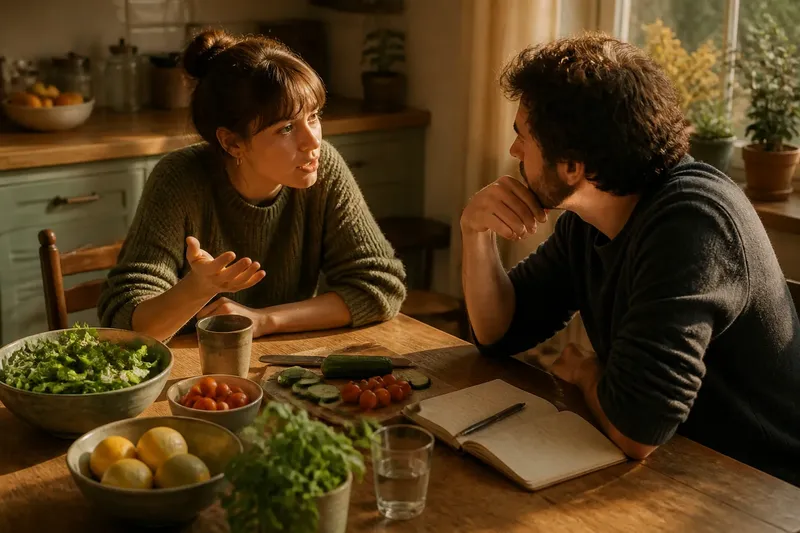
The Pause Between Hearing and Replying
The pause between hearing and replying helps you separate a speaker’s point from your first reaction, so your answer fits the conversation in front of you.
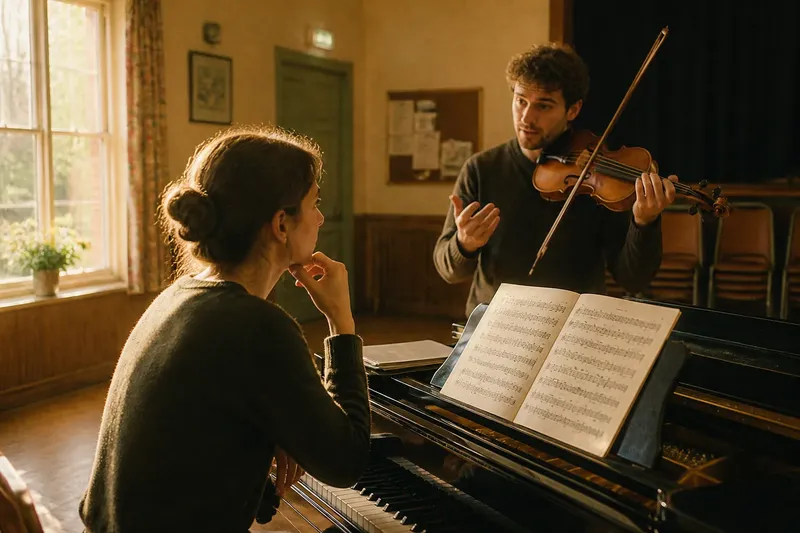
At a rehearsal in a village hall, a violinist stops halfway through a passage and says, “That entrance still feels crowded.” The pianist is ready to explain that she followed the marked tempo. Before replying, she lets the comment settle and looks at the score between them.
The pause between hearing and replying is useful when a remark could point to more than one thing. It gives the listener time to notice what the speaker has actually named, rather than rushing to defend a choice or solve a different problem.
A pause separates the comment from the imagined accusation
The pianist’s explanation may be accurate, but it does not yet address the crowded entrance. The violinist might mean that the notes overlap, that the tempo feels hurried, or that the two players are coming in together too heavily. A defensive reply could turn a question about timing into a dispute about blame.
In music, a rest on the page is not an empty space; it shapes what follows. Conversation has a similar pause: not a demand for silence, but a moment to keep the next reply from landing on the wrong beat.
The pianist notices that she is about to say, “I played exactly what was written.” She does not have to suppress that view. She simply waits until she can tell whether it belongs in the next turn.
Listen for the specific detail that can guide a reply
The violinist points to the measure where both instruments meet. The notes are correct, he says, but the shared entrance sounds thick. He wants to try a lighter bow stroke while the pianist keeps the same tempo.
That detail changes the conversation. The issue is not whether the pianist obeyed the score; it is how the two parts sound together. Her pause allowed the first remark to become a specific musical observation instead of an argument she had supplied herself.
Imagine a different invented situation: a stage manager says a cue feels late during a run-through. The actor’s starting point is a line delivered on the marked word; she begins to explain that choice, then waits and hears the manager specify that the lighting change follows the line too slowly. The next decision is clear: keep the actor’s timing and adjust the lighting cue, rather than moving the line.
Notice the first reply without treating it as the answer
A quick reaction can reveal what feels at stake. The pianist may be worried that her preparation is being questioned, or irritated at being corrected in front of the group. Those feelings deserve attention, but they do not establish what the violinist intended.
She can name the impulse privately: “I want to defend the tempo.” Then she can decide whether that defence helps now. Once the violinist has described the entrance, she can explain why she kept the marked tempo and suggest trying the lighter stroke before changing it.
This is not a rule to delay every response. A safety cue during a performance needs immediate attention, and a cutting remark may call for a clear boundary. In an ordinary exchange, though, a small pause can prevent a reply to an accusation nobody made.
How can you tell whether the pause helped?
What should I listen for before I answer?
Notice the concrete subject of the remark: a timing, a choice, an effect or a feeling. If your planned reply addresses a different subject, wait for more of the speaker’s thought or ask what detail they mean.
How long should I pause?
There is no fixed interval. Let the speaker finish, take a natural breath and check what your reply would respond to; if the other person seems to have finished and the point is clear, continue.
What if the comment is unclear?
Ask for the relevant detail instead of guessing. In the rehearsal, the pianist can ask which entrance feels crowded; the answer can then point to a shared measure rather than invite a broad defence.
Can I still disagree after listening?
Yes. Understanding a comment is not the same as accepting it, and the pianist can explain her reason for keeping the tempo after the specific concern is clear.
Use the pause to choose a more useful next turn
Back at the rehearsal, the pair try the lighter bow stroke while the pianist keeps the tempo. They hear whether the entrance feels less dense, then decide together whether another adjustment is needed. The pause has not settled every musical choice; it has helped them make the next choice about the same thing.
When a familiar or pointed remark arrives, the pause between hearing and replying can help you distinguish its actual subject from the explanation already forming in your head. A useful final check is simple: can you name the detail your answer addresses? If not, leave room for the speaker to finish before you take your turn.