How to Make a Public Forum Work for the People in the Room
Learn how to shape a public forum around its purpose, audience and access needs, so people can understand the discussion and contribute meaningfully.
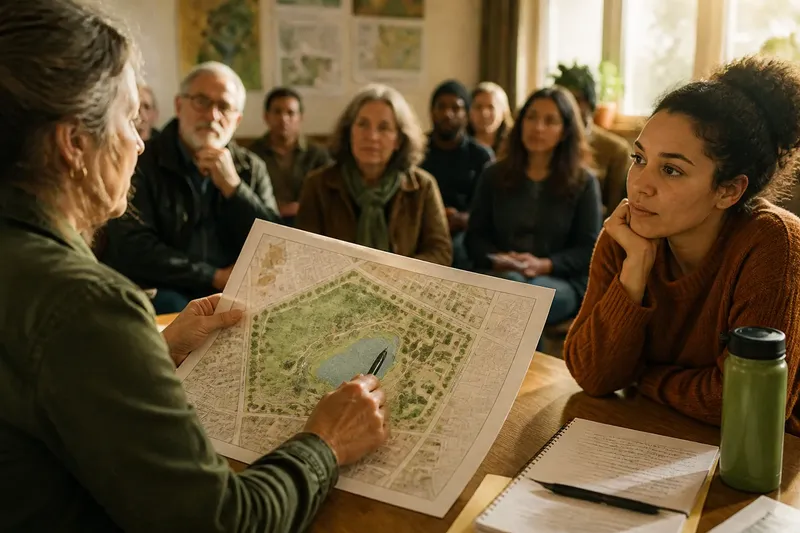
At a neighbourhood meeting, someone arrives with a folded map of the park while another person is still trying to work out how to join the conversation. A public forum works best when its purpose and customs are plain to both. The room need not imitate a parlour debate or a formal hearing; its arrangements should fit the people present and the decision or understanding they seek.
State what the forum is for
Before choosing a format, decide whether the gathering is meant to share information, hear concerns, develop options or make a decision. Those purposes call for different exchanges. A listening session should leave room for people to describe what they have experienced; a decision meeting needs to make clear who has authority to decide and how participants’ views will be considered.
Put the purpose in the invitation and repeat it at the start. Explain what is settled, what remains open and what will happen after the meeting. This helps prevent a common mismatch: participants arrive expecting to shape a choice, while organisers intend only to explain it.
Make the customs visible without turning them into a script
People should not have to guess how to contribute. Say how to signal that they want to speak, how questions will be handled, and whether the group will take comments on one subject before moving to another. Keep the explanation brief enough to remember.
A moderator’s most useful work is often interpretive rather than procedural: clarifying an ambiguous question, checking whether a reply addressed it, or distinguishing a new concern from a repeated one. That takes judgement. A fixed speaking order can make a meeting feel tidy while leaving its central uncertainty untouched.
Imagine a residents’ meeting about a proposed change to a shared park. The organiser brings a map, a written proposal and a blank sheet for unanswered questions. First, they explain that the group can advise but cannot approve the plan. Next, they invite residents to point to a location on the map and describe the concern, then ask the project lead to respond to each distinct issue. At the end, the organiser reads back the unresolved questions and names who will follow up. The observable result should be a clearer record of concerns, replies and open matters, rather than an assumption that agreement has been reached.
Choose a format that fits the actual task
A large room can make it difficult to hear a hesitant speaker, while a small group can make disagreement feel personal. For a complicated topic, a short explanation followed by discussion in smaller groups may help people formulate specific questions. If the purpose is to hear distinct experiences, invite individual accounts without requiring anyone to debate another person’s account.
Online gatherings have different friction. A video-call delay can make people speak over one another; a text forum can bury a reply beneath later posts. A host can name the next speaker, pause before moving on, or group written comments by subject. These choices should solve a visible problem, not add ceremony for its own sake.
Check the conditions that shape participation
- Check whether the invitation states the forum’s purpose; if it does, use that purpose to choose the agenda, but if it does not, ask organisers to clarify before inviting contributions.
- Check whether participants know who can make the decision; if the decision-maker is present, invite a direct response, but if not, identify how and when their response will be shared.
- Check whether the room or platform is accessible to the people invited; if it is, keep the planned format, but if it is not, offer an accessible venue or a workable remote route.
- Check whether people can hear and follow the discussion; if they can, continue, but if they cannot, pause to adjust seating, sound or the pace.
- Check whether questions are being answered or merely acknowledged; if replies address the point, move to the next issue, but if they do not, restate the question and invite a specific answer.
- Check whether the same concern is recurring because it remains unresolved; if it has been answered, record the response and move on, but if it has not, add it to the open-questions list.
- Check whether participants understand what happens after the meeting; if the next action is clear, confirm it aloud, but if it is not, assign a follow-up route before closing.
Questions people ask about public forums?
How is a public forum different from a private discussion?
A public forum may include people who have no shared history or background, so organisers should explain the subject and terms that a familiar group might leave unstated. It may also have a wider audience than the people speaking, which can affect how participants frame their remarks.
Does a moderator decide who is right?
Not usually. A moderator can keep the exchange intelligible, clarify what a question asks and make sure the group understands the next step, while the relevant decision-maker or process determines what conclusions follow.
How can a quiet participant join the discussion?
Offer more than one route, such as speaking aloud, submitting a written question or adding a point through a small-group conversation. Explain those options before discussion begins, rather than waiting for someone to request an accommodation in front of the room.
What should happen when a forum cannot resolve an issue?
Record the unresolved point in clear language and state who will respond, by what channel and at what stage. If no answer is available, say so plainly rather than letting silence appear to be agreement.
Leave people with a clear next move
A public forum does not need to settle every disagreement to be useful. It should leave participants better able to distinguish what was heard, what was answered, what remains uncertain and who will act next.
For anyone organising or joining a public forum, the most useful detail may be the follow-up route: a named contact, a place to read the record, or a way to submit a question after the meeting. That small piece of clarity helps a conversation continue beyond the room without pretending that everyone left with the same view.